Mrs. Perez Ochieng: Knowledge as the New Asset – Building Africa’s Innovation Economy
Chief Executive Officer, SACOMA Global Foods Innovation
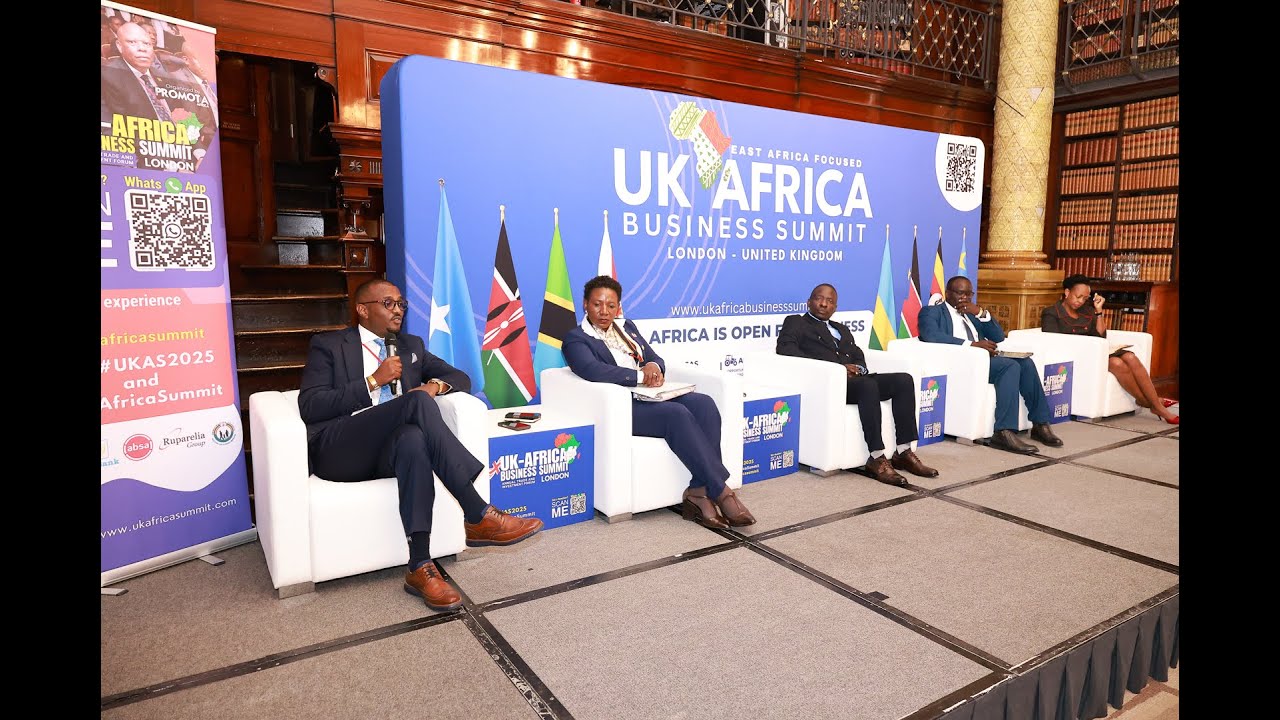
📍 UK–Africa Business, Trade & Investment Summit 2025 | London, United Kingdom
📅 12 September 2025
From Produce to Innovation
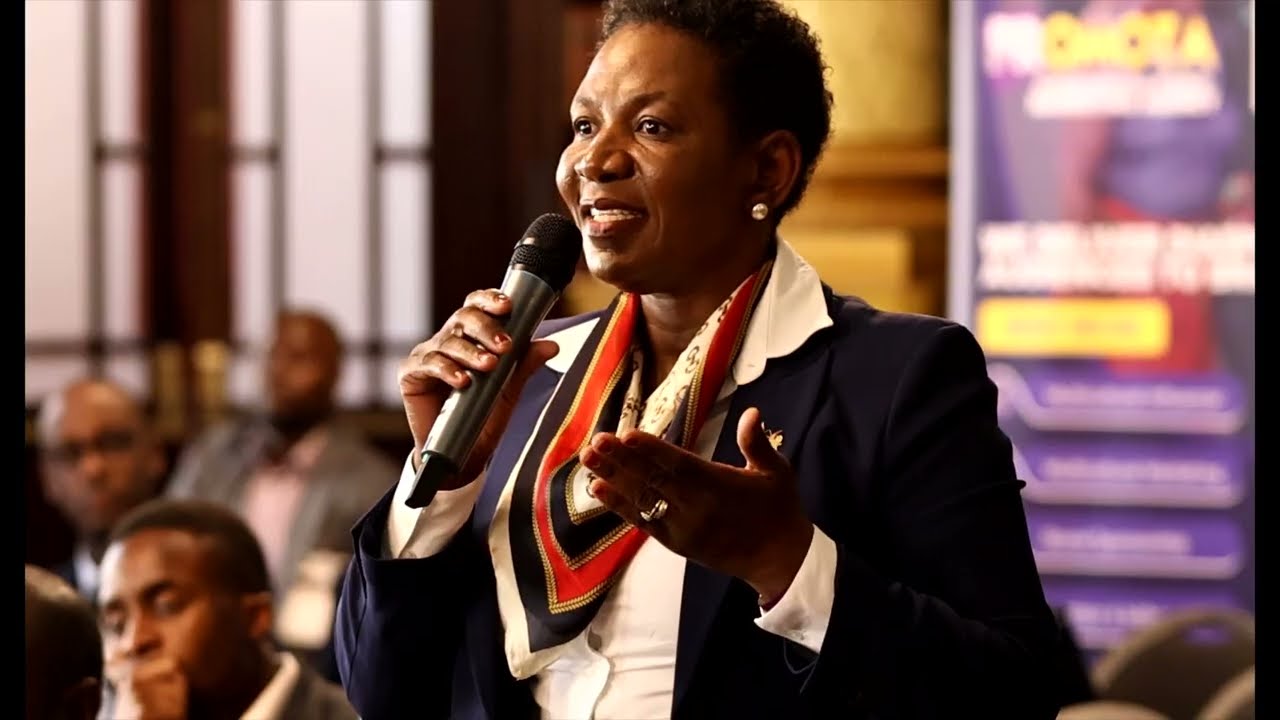
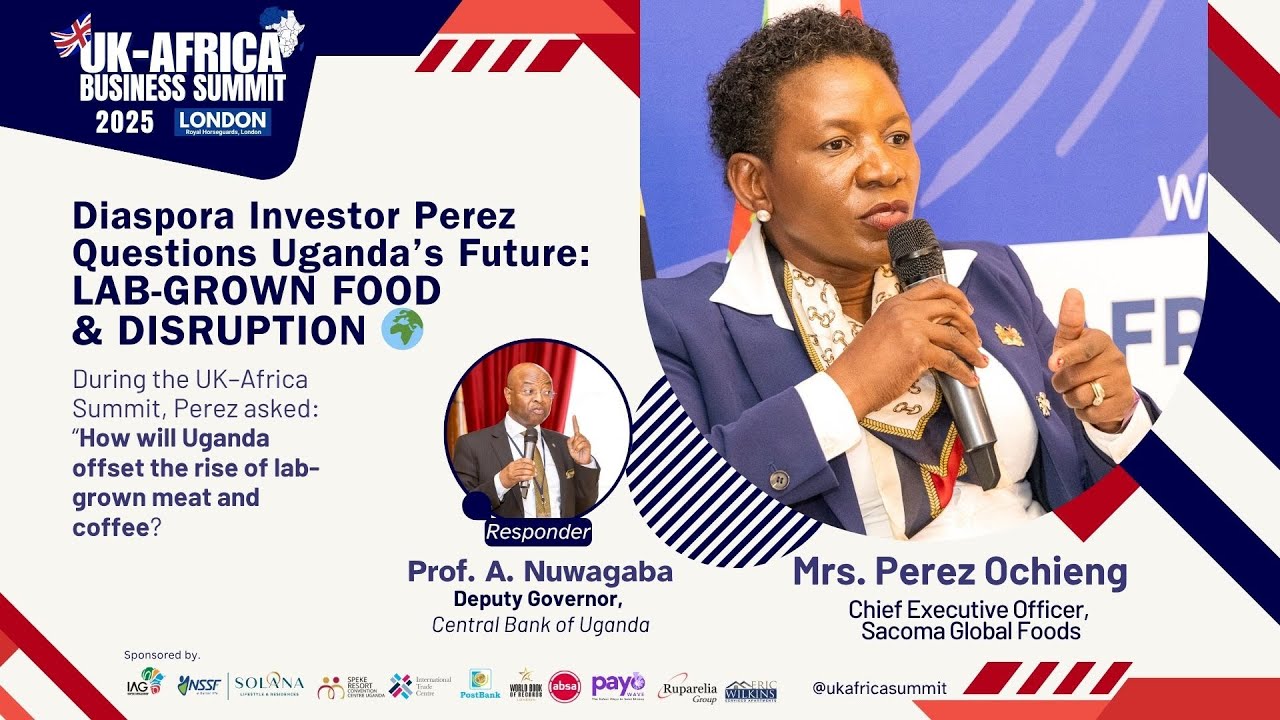
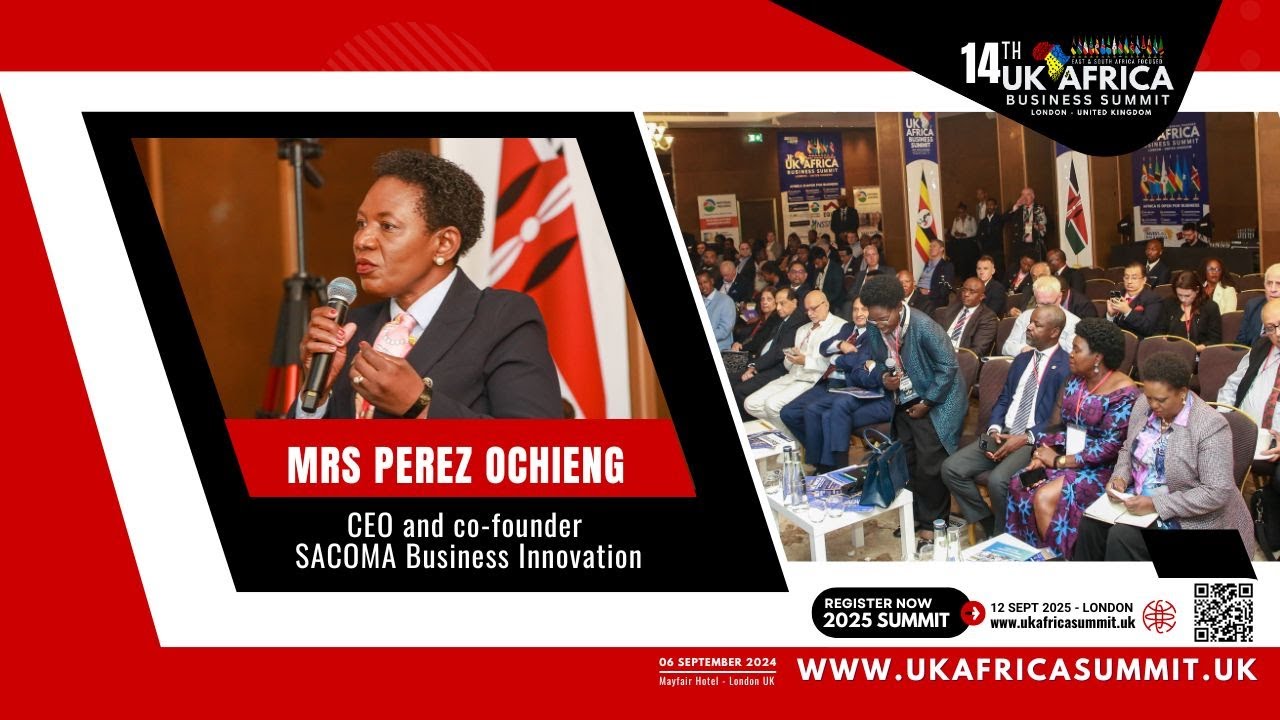
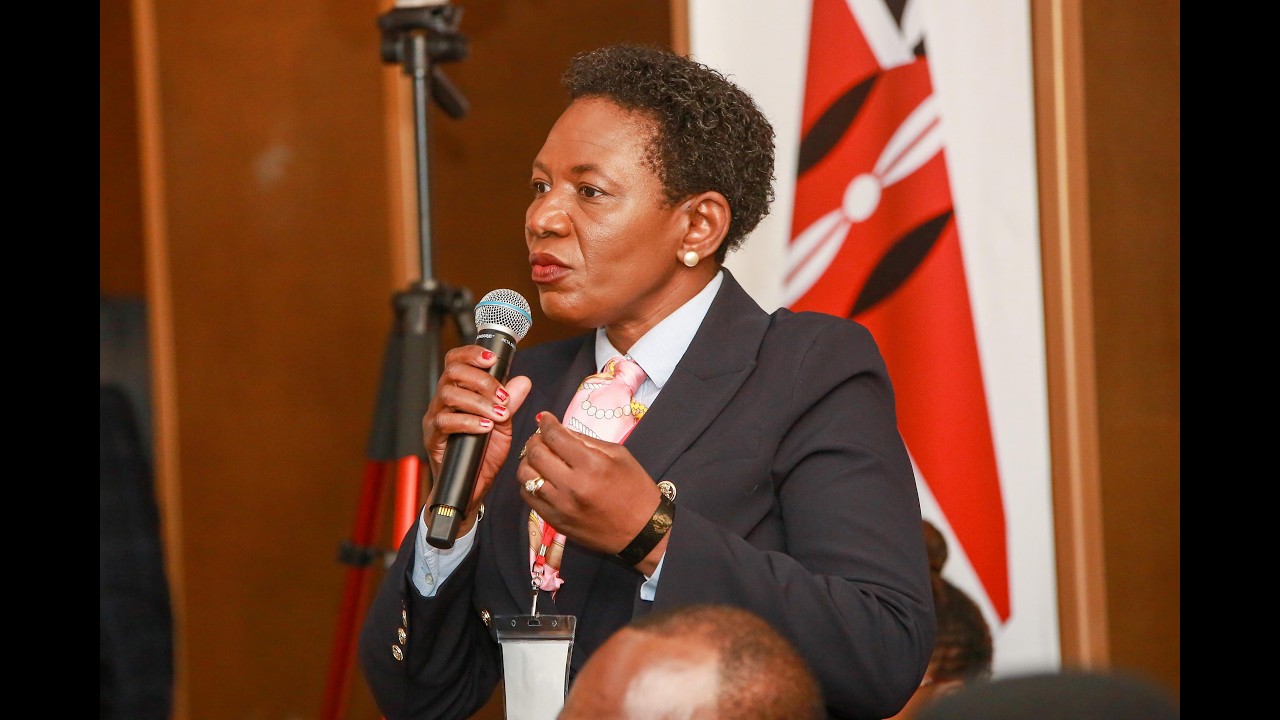
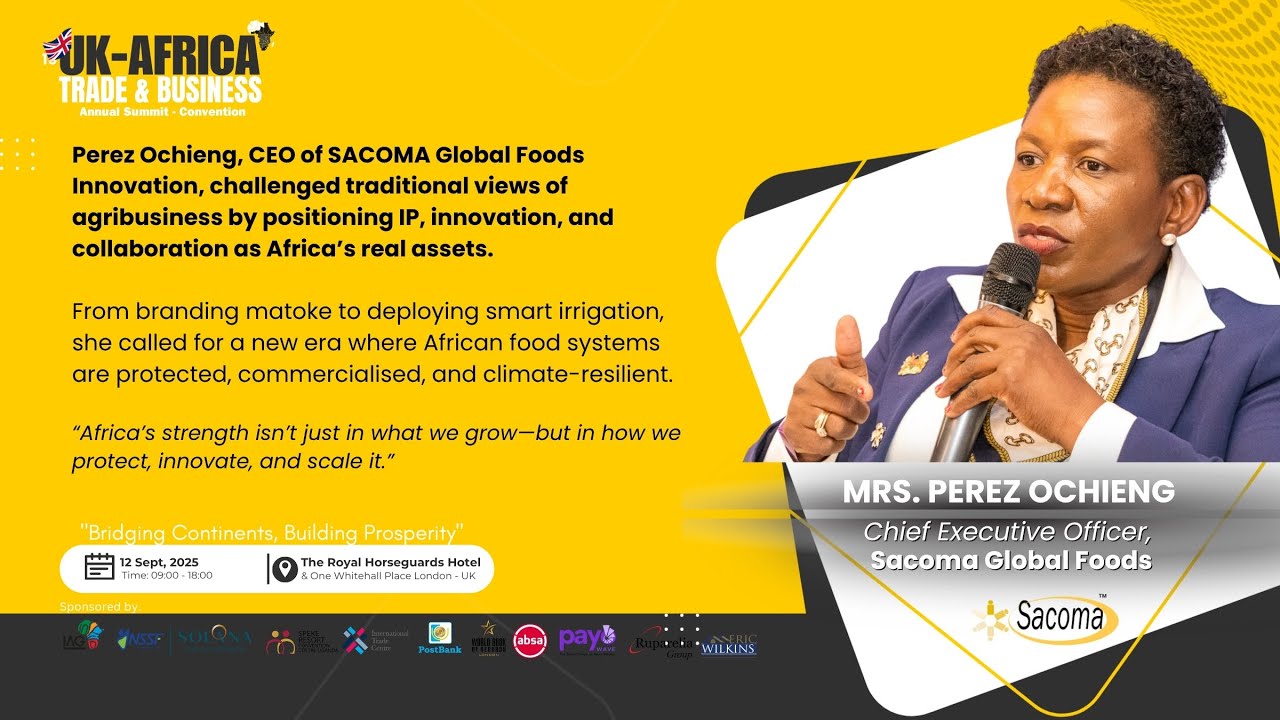
At the 15th UK–Africa Business, Trade & Investment Summit 2025, Mrs. Perez Ochieng, CEO of SACOMA Global Foods Innovation, delivered one of the event’s most forward-thinking perspectives — calling for Africa to redefine its agricultural and industrial future through knowledge, innovation, and intellectual property (IP) ownership.
Over three decades, SACOMA has evolved from a UK-based importer of African produce into a global food innovation enterprise operating across Africa, South Korea, and Taiwan. Mrs. Ochieng’s message was clear: Africa must move beyond exporting raw produce to owning the knowledge and brands behind it.
“We’ve moved from talking about value addition to building knowledge assets that define Africa’s place in global food systems.” — Mrs. Perez Ochieng
Knowledge and IP as Africa’s True Assets
Mrs. Ochieng argued that Africa’s most strategic assets are not its land or crops — but the ideas, recipes, and processes that give them global market value. Drawing parallels with South Korea’s protection of kimchi as a national IP brand, she urged that Uganda’s signature products — from coffee to matoke — must be similarly branded, protected, and monetised.
“When I speak of assets, I don’t mean land — I mean the knowledge and innovation behind African food products.”
This approach reframes African agribusiness as part of the creative economy, where design, branding, and data create value far beyond production.
Collaboration Over Competition
Mrs. Ochieng championed collaboration, not competition, as the key to scaling Africa’s agri-food transformation. SACOMA’s partnerships with innovators such as Nelson Tugume of @_InspireAfrica integrate agritech, storytelling, and IP ownership to build sustainable export brands.
“Opening new markets is not a solo journey — it’s about collaboration.” — Mrs. Perez Ochieng
She emphasised the African diaspora as a vital link, bringing skills, capital, and market access to connect local innovation with global demand.
Smart Agriculture and Climate Resilience
Looking to the future, Mrs. Ochieng called for climate-smart solutions and data-driven agriculture. She highlighted opportunities in nano water management, precision irrigation, and AI-based farming systems, urging policymakers to equip youth with the tools to lead Africa’s agri-tech revolution.
“Our current irrigation methods waste water. Efficient systems already exist — we must adopt and localise them.” — Mrs. Perez Ochieng
A Multi-Stakeholder Call to Action
Mrs. Ochieng proposed a collaborative roadmap for Africa’s agribusiness transformation:
- Farmers: Use data and IP to move up the value chain.
- Innovators & Investors: Fund scalable, knowledge-based ventures.
- Policymakers: Create IP-friendly ecosystems for innovation.
- Diaspora: Bridge expertise and investment to expand Africa’s innovation networks.
Key Takeaway
SACOMA’s model marks a turning point — from “Made in Africa” to “Invented in Africa.” By treating knowledge as capital and innovation as infrastructure, Mrs. Ochieng envisions an Africa where creativity, sustainability, and technology drive prosperity.
“Africa’s competitiveness will come not from what we grow — but from how we protect, innovate, and commercialise it.” — Mrs. Perez Ochieng
Cross-Reference Summary: Innovation & Creative Industries – Knowledge, Energy & Value Creation
Mrs. Ochieng’s innovation framework aligns seamlessly with Hon. Ruth Nankabirwa’s clean-energy industrialisation agenda and Nelson Tugume’s Inspire Africa Coffee model — together forming a blueprint for Africa’s new creative economy.
- Ochieng: Redefines agribusiness through IP ownership and innovation ecosystems.
- Nankabirwa: Powers transformation through renewable energy and industrial competitiveness.
- Tugume: Operationalises innovation through exportable brands and digital traceability.
This tri-sector alignment — innovation, energy, entrepreneurship — positions Uganda and Africa as leaders in the Knowledge-to-Value Economy, where creativity and sustainability converge to power inclusive growth.