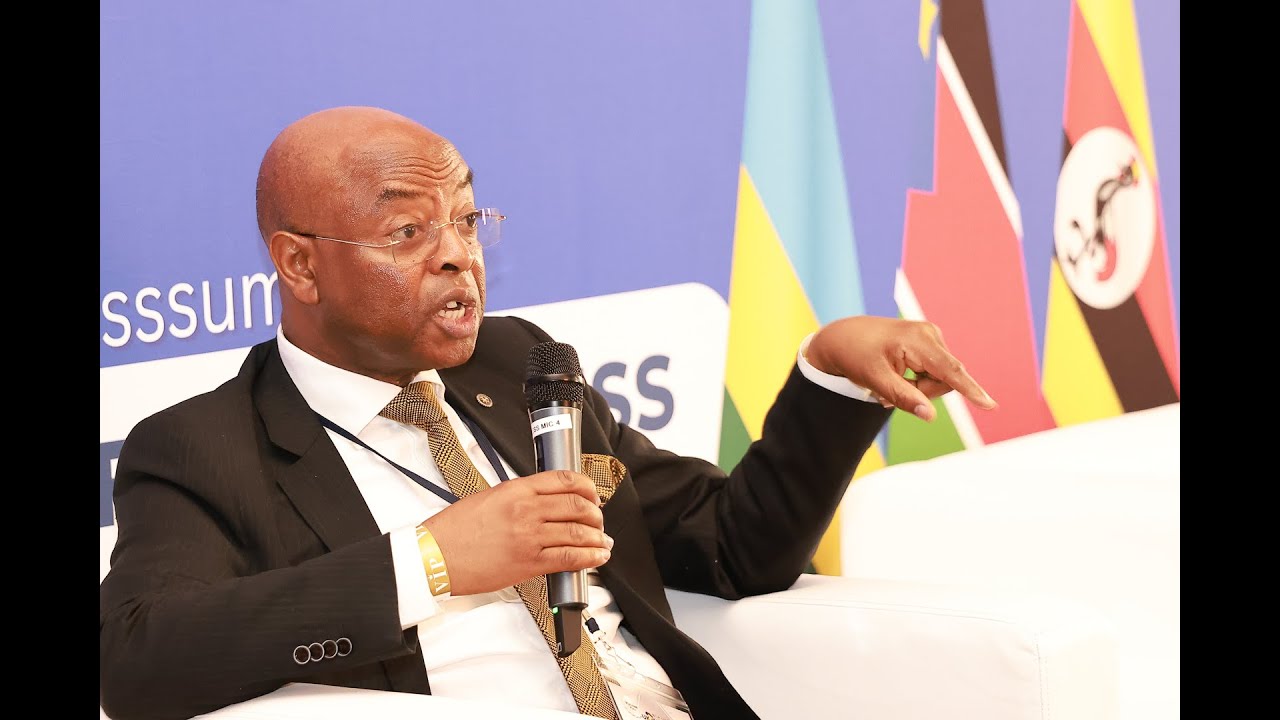
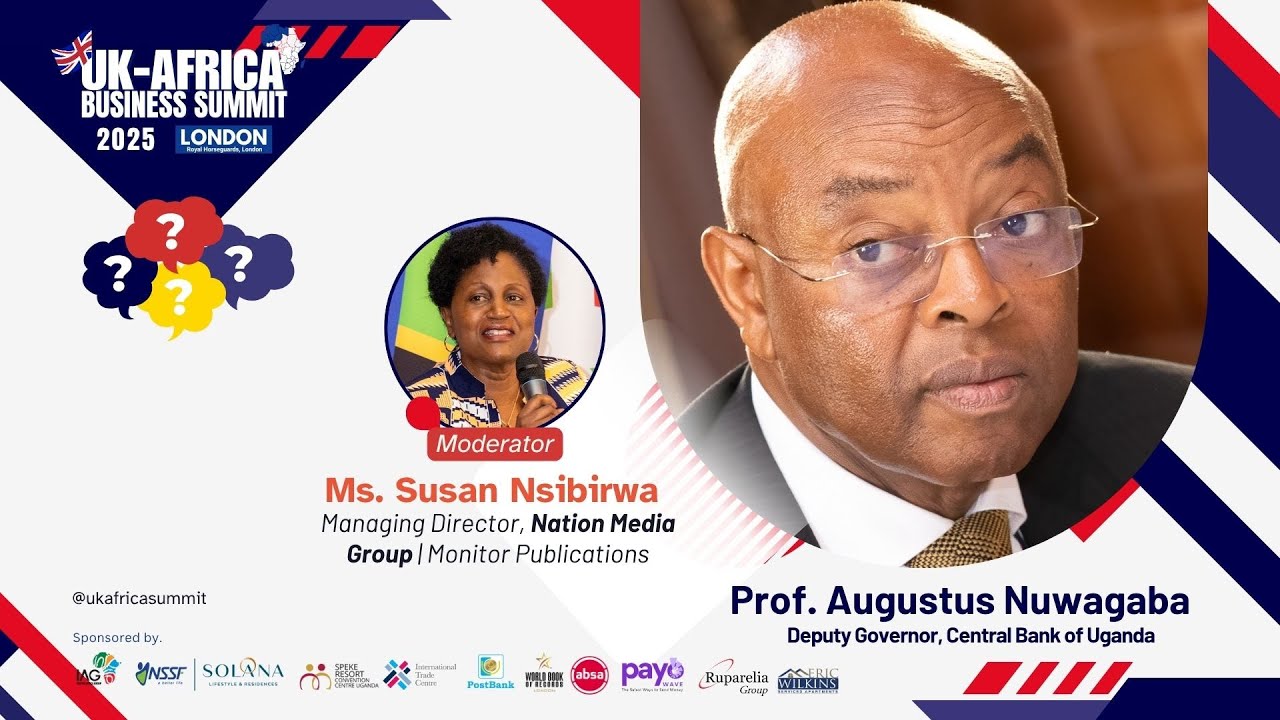
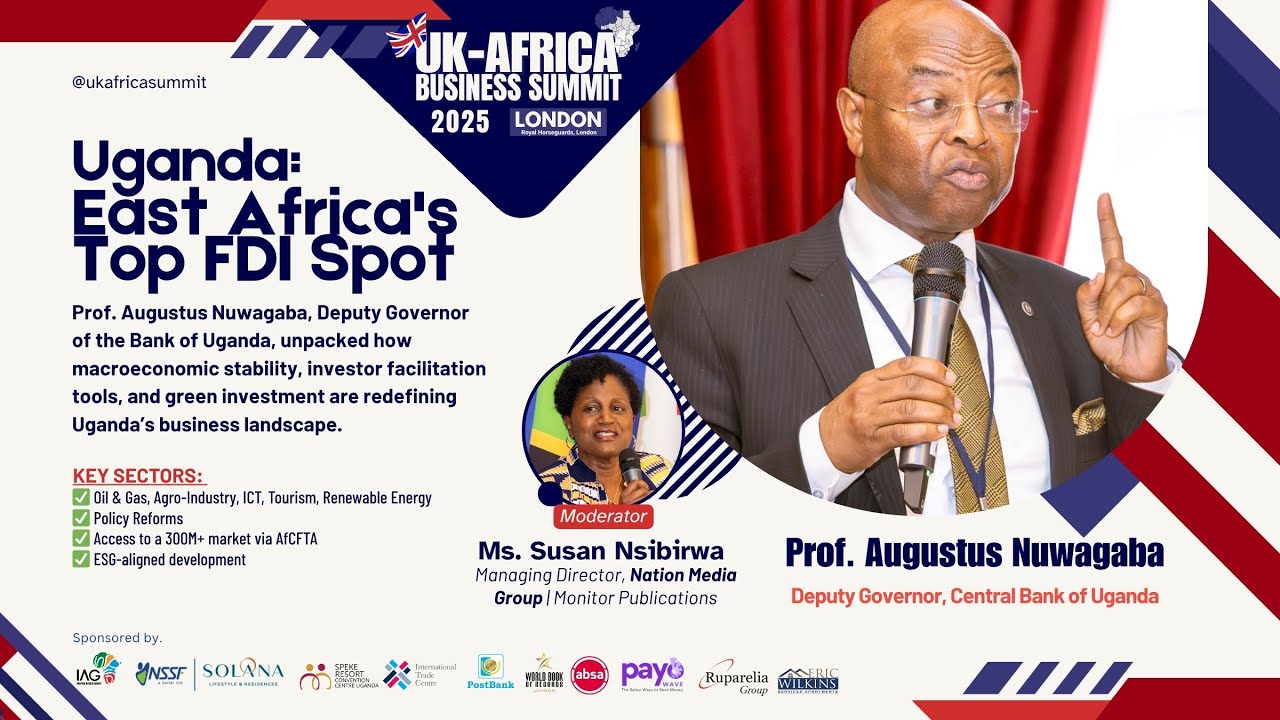
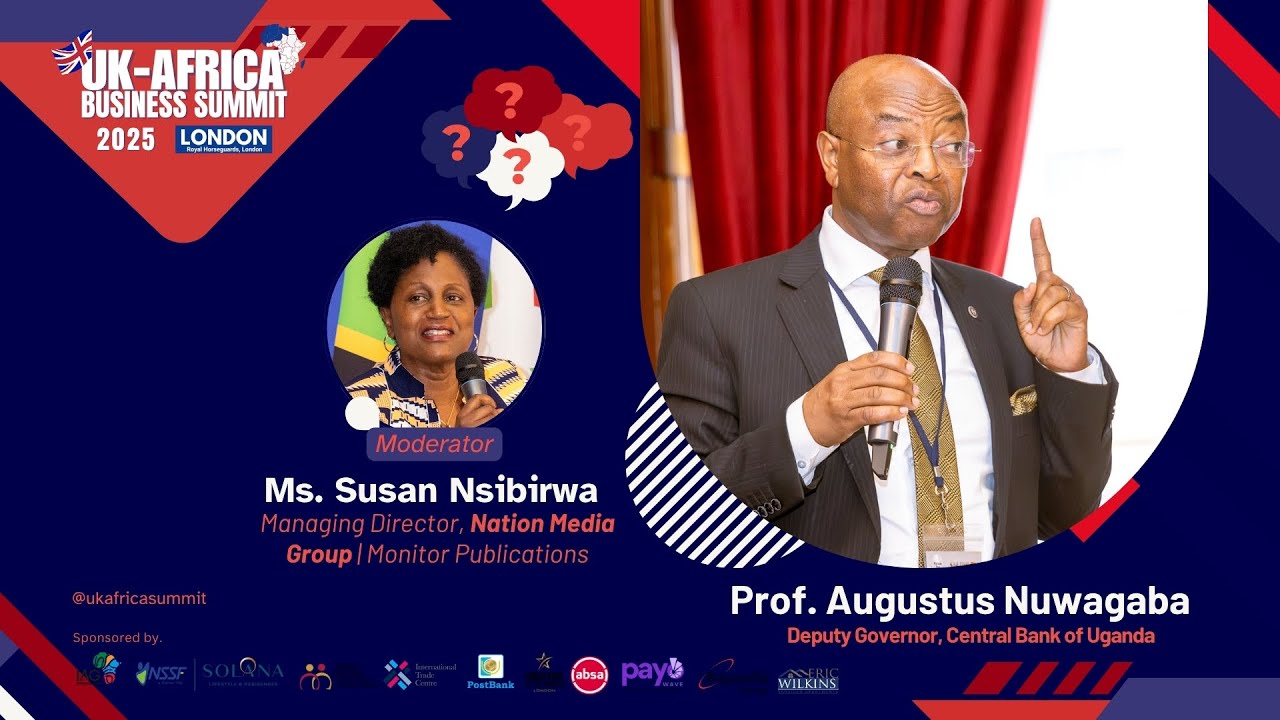
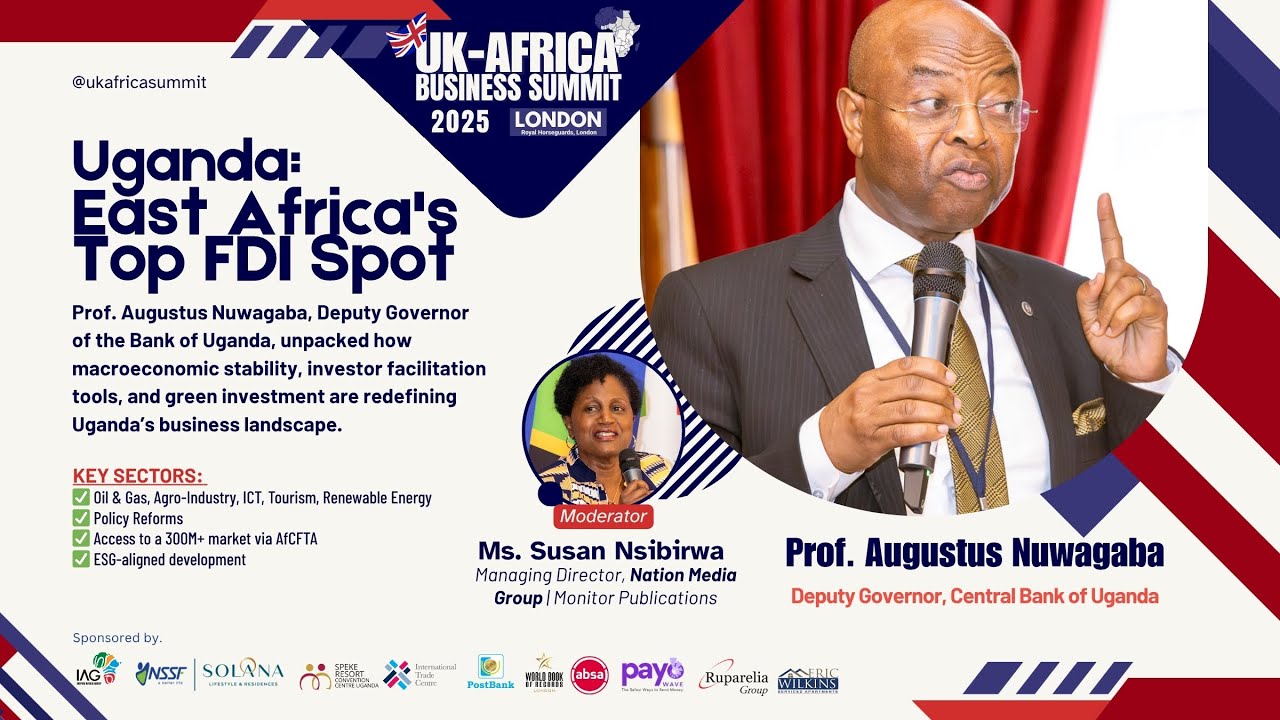
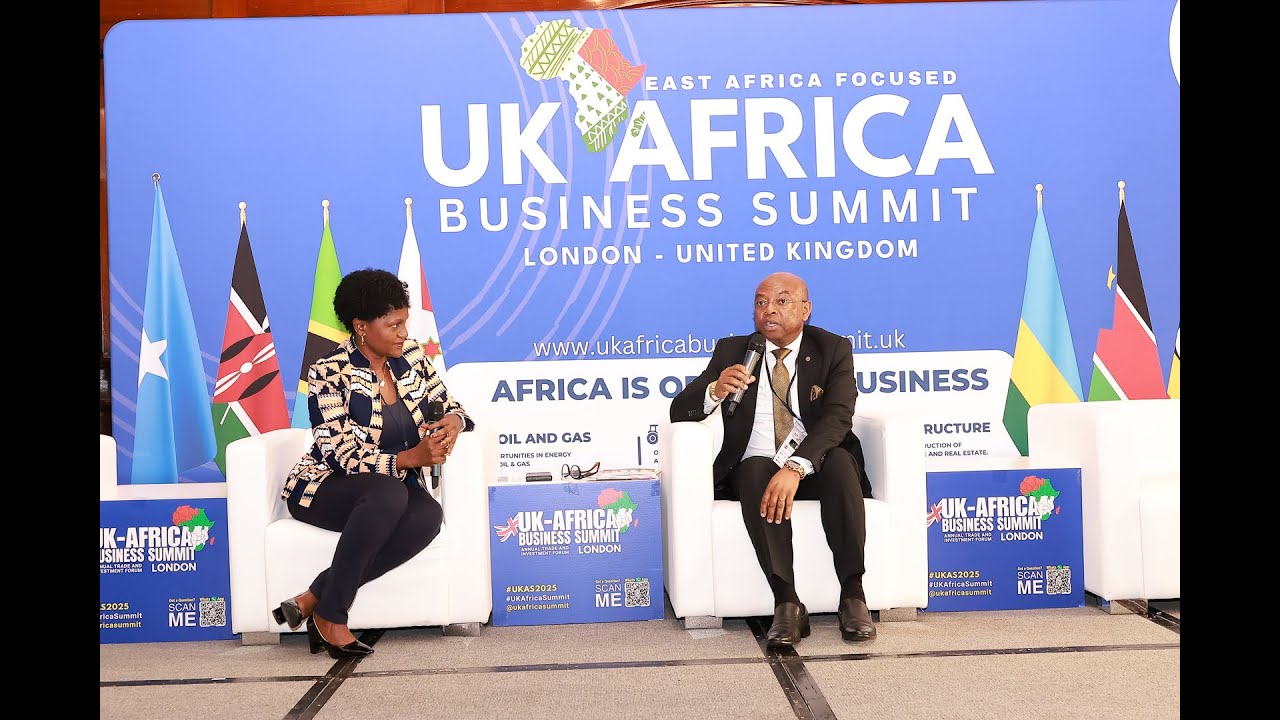
At the UK–Africa Business, Trade & Investment Summit 2025, Prof. Augustus Nuwagaba, Deputy Governor of the Bank of Uganda, delivered an illuminating address outlining Uganda’s integrated approach to environmental responsibility, green finance, and inclusive industrialisation — defining Uganda as Africa’s “Power of Green.”
Uganda’s carbon credit potential is among the highest in the world, with an estimated 33 million carbon credits valued at approximately $330 million. This achievement is underpinned by consistent greenery, organic agricultural practices, low industrial pollution, and strong forest and wetland conservation policies. The result is a tangible opportunity for carbon trading and offset partnerships with international investors.
At the institutional level, Uganda’s Central Bank has introduced a pioneering Green Finance Framework structured around two pillars: Green Taxonomy Guidelines — which align financial products with sustainability benchmarks — and Sustainability Certification developed in collaboration with the Central Bank of Kenya to harmonise ESG standards across borders. These mechanisms make Uganda a regional pioneer in embedding environmental accountability within financial systems.
Uganda also employs the Dynamic Stochastic General Equilibrium (DSGE) model, a sophisticated forecasting tool that integrates both financial and environmental variables. This ensures the nation’s fiscal and monetary policies are evidence-based, environmentally conscious, and geared towards long-term resilience.
Agriculture remains Uganda’s top government priority and the cornerstone of its economic transformation strategy. The Agro-Industrialisation Programme focuses on value addition, mechanisation, and food security, guided by an open-door policy that welcomes private-sector participation and foreign technology transfer. As Prof. Nuwagaba emphasised in discussion with diaspora entrepreneur Perez Ochieng, Uganda’s regulatory environment is designed to embrace disruptive agri-tech innovations that support sustainability and growth.
Another defining advantage is Uganda’s demographic strength — one of the youngest and most educated populations globally. A motivated, trainable, and innovation-ready workforce forms the backbone of Uganda’s industrial diversification and competitiveness.
Entrepreneurs and investors exploring Uganda’s market are encouraged to align projects with the national Green Taxonomy Framework, develop sustainable and organic value chains, invest in carbon offset projects and renewable energy, and partner in agro-industrialisation and local manufacturing for export substitution. These investment channels are fully aligned with Uganda’s Vision 2040 and the broader AfCFTA sustainability agenda.
Uganda’s investment appeal is further reinforced by its natural, geographical, and cultural strengths: a land-linked position connecting Central and East Africa; fertile, organic agricultural potential; the snow-capped Rwenzori Mountains; abundant biodiversity; and a dynamic, youthful society often symbolised by Kampala — the “city that never sleeps.”
In his closing remarks, Prof. Nuwagaba affirmed Uganda’s vision for sustainable growth:
“We are not only building an economy; we are safeguarding the planet while doing so.”
Uganda stands ready for green investment and innovation, backed by consistent policies, stable governance, and strong environmental credentials. As a model for green economic transformation in Africa, Uganda continues to offer measurable opportunities across sustainability, agro-industrialisation, and climate finance.